
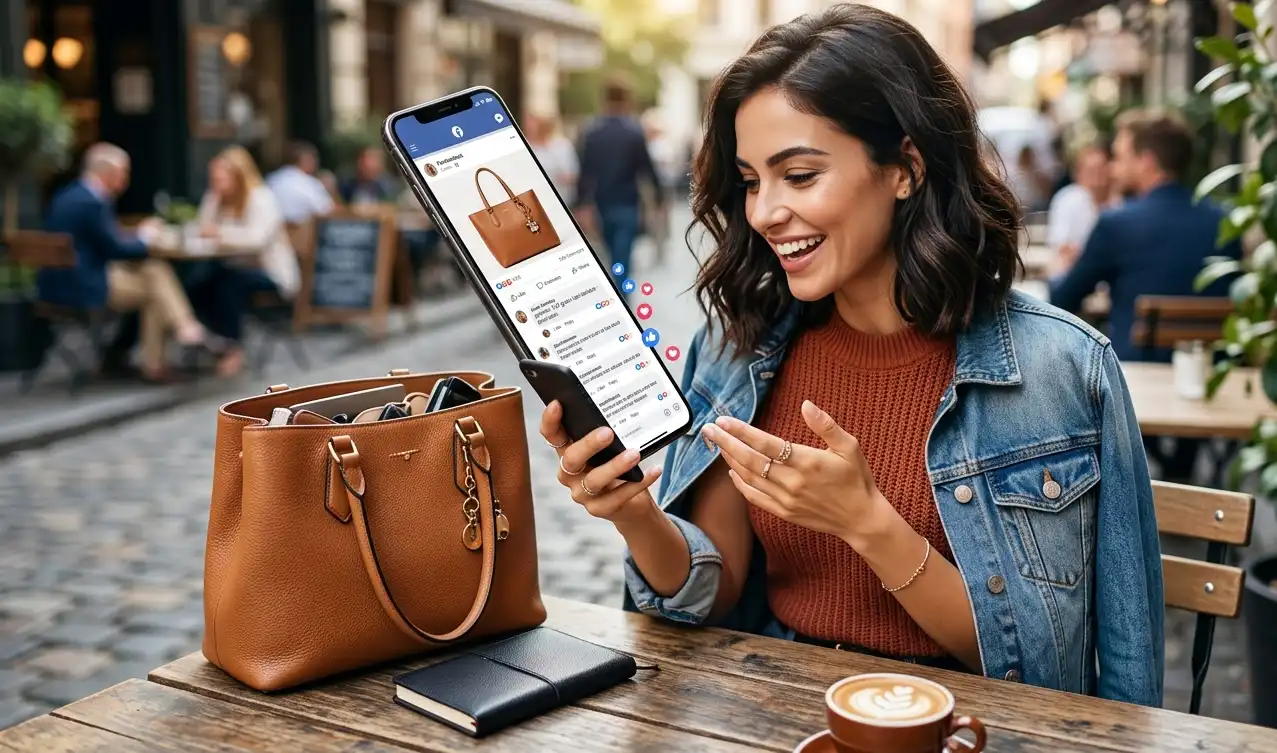
If your beautiful product photos are pulling in likes but the comment section stays empty, you are leaving real money on the table. For fashion labels, leather goods makers, and eCommerce stores, Facebook post engagement is not a vanity metric — it is the engine behind reach, trust, and lower ad costs. A post with a buzzing comment thread tells the algorithm your content is worth showing to more people, and it tells shoppers that real humans love your brand.
This guide breaks down exactly how fashion and leather brands can transform quiet product posts into conversation hubs. You will get step-by-step strategies, real-world examples, the mistakes that silently kill discussion, and 2026 best practices you can apply today.
Why Comments Matter More Than Likes
A like takes half a second. A comment takes thought, intention, and a willingness to be seen publicly engaging with your brand. That difference is everything.
When you want to increase Facebook engagement, comments do three things a like never can:
- They boost organic reach. Facebook’s ranking system treats comments as a stronger signal than passive reactions. More comments mean more distribution to friends-of-fans and lookalike audiences.
- They build social proof. A shopper who sees forty people debating which color tote to buy trusts you far more than one who sees a silent product shot.
- They lower your ad costs. Ads with active comment threads tend to earn higher relevance scores, which can reduce cost-per-click and cost-per-result over time.
For a leather brand selling a €150 handbag, the buyer needs reassurance before clicking “Add to Cart.” A comment thread full of real customers saying “I’ve had mine two years and it still looks new” does more selling than any caption you could write.
The Psychology Behind Facebook Comments
People comment for predictable emotional reasons. Understanding these unlocks better content:
- Identity and self-expression — “This is so my style” lets people signal who they are.
- Belonging — joining a conversation makes someone feel part of a community.
- Opinion-sharing — humans love being asked what they think, especially on subjective topics like style and color.
- Helping others — customers enjoy answering questions from prospective buyers.
Fashion and leather are ideal categories for this because taste is personal and visual. A handbag is never just a handbag — it is an expression of someone’s aesthetic. Your job is to give people an easy, low-pressure reason to weigh in.
Callout: The fastest way to earn a comment is to ask a question that someone can answer in under five seconds without overthinking it. “Gold hardware or silver?” outperforms “What do you think of our new collection?” every time.
Step-by-Step Engagement Strategies That Work
Here is a repeatable framework for building Facebook comments on any product post.
Step 1: Lead With a Single, Easy Question
End your caption with one specific, binary, or short-answer question. Avoid open-ended prompts that require effort.
- Weak: “Tell us your thoughts on our spring line!”
- Strong: “Cognac brown or classic black for autumn? 👜”
Step 2: Make the Visual Do Half the Talking
Pair your question with a side-by-side image, a two-color comparison, or a “which one” grid. When people can answer just by referencing the picture, comment volume jumps.
Step 3: Reply to Every Early Comment Fast
The first 60 minutes matter most. Reply to early commenters with a genuine response (not just an emoji) to signal the algorithm that a conversation is happening. This momentum pushes the post into more feeds.
Step 4: Ask a Follow-Up Inside the Thread
When someone says “Black, definitely,” reply with “Love it — would you wear it crossbody or over the shoulder?” One comment becomes three.
Step 5: Pin Your Best Comment
Pin a thoughtful customer comment or a helpful answer to the top of the thread. It models the behavior you want and reassures new visitors.
Content Formats That Generate Comments
Not all posts are built for discussion. These formats consistently outperform plain product shots when your goal is Facebook post engagement.
Style Preference Questions
Ask people to choose between options or describe how they would style a piece.
Example: “You just got our new leather crossbody. Are you pairing it with jeans and a tee, or a summer dress? 🌿”
Polls
Native Facebook polls or comment-based polls (“React ❤️ for tan, 👍 for navy”) are friction-free and addictive. They work brilliantly for color drops and new releases.
Before-and-After Posts
Leather ages beautifully, which makes it perfect for transformation content.
Example: “Swipe to see this messenger bag on day one vs. after three years of daily use. Drop a 🔥 if you love a leather patina.”
This invites comments from existing owners who want to share their own bag’s journey.
Product Launch Teasers
Build anticipation before a launch by asking the audience to guess details.
Example: “Something new drops Friday. Can you guess the color from this close-up? First correct comment gets early access. 👀”
A guessing game turns a launch into a game show — and the comments pile up.
Customer Feedback Posts
Publicly invite reviews and questions.
Example: “Calling all [Brand] owners — tell us your favorite thing about your bag below. New shoppers, ask your questions here and our community will answer!”
This builds a self-sustaining thread where customers sell to prospects on your behalf.
User-Generated Content (UGC) Campaigns
Run a simple campaign: “Tag us in a photo with your bag using #MyLeatherStory for a chance to be featured.” Then post the submissions and tag the creators. People comment to celebrate being featured and to cheer on others.
How to Encourage Authentic Conversations (Without Being Spammy)
The line between “engaging” and “desperate” is thin. Here is how to stay on the right side of it.
- Ask, don’t beg. “Comment below!” repeated on every post reads as spam. Weave the question into a genuine context instead.
- Never use engagement bait Facebook penalizes. Phrases like “COMMENT YES TO WIN” or “TAG 10 FRIENDS NOW” can suppress your reach. Facebook’s systems actively demote obvious bait.
- Respond like a human, not a brand bot. Use names, reference what they said, and add personality. A real reply earns more replies.
- Create space for opinions you didn’t script. Sometimes the best threads come from “What would make this bag perfect for you?” — even if the feedback is critical, it signals you listen.
- Be consistent. Communities form over weeks, not in a single viral post. Show up, reply, and reward participation regularly.
Callout: Authenticity is itself a strategy. Brands that reply thoughtfully to negative or neutral comments often convert skeptics into loyal buyers — and onlookers notice the care.
Common Mistakes That Kill Engagement
Avoid these conversation-killers that quietly tank your social media engagement:
- Posting and ghosting. If you never reply, people stop commenting. Engagement is a two-way street.
- Asking vague questions. “Thoughts?” gives people nothing to grab onto.
- Overloading the caption. Walls of text bury the question. Keep it tight and put the prompt near the end.
- Ignoring the first hour. Slow replies mean lost algorithmic momentum.
- Disabling or hiding comments out of fear. Negative feedback handled well is more persuasive than a sterile, comment-free feed.
- Treating every post as a hard sell. A feed of “Buy now” posts gives no reason to talk. Mix in story, community, and questions.
- Using the same prompt repeatedly. Variety keeps your audience curious.
How Comment Engagement Improves Ad Performance
Comments are not just an organic play — they directly strengthen your paid campaigns and overall Facebook marketing strategies.
- Social proof on ads. When you boost a post that already has 80 comments, new viewers see a thriving conversation. That accumulated proof increases click-through and conversion rates.
- Lower cost-per-result. Engaging ads often earn better quality and relevance signals, which can reduce what you pay per click or purchase.
- Reusable ad assets. A post that performed well organically is a proven candidate for paid promotion — you already know it resonates.
- Persistent social proof. Use the “Use Existing Post” option when creating ads so your comment count and reactions carry over instead of resetting to zero. This single tactic is one of the most overlooked levers for Facebook ad engagement.
- Audience insights. Comment threads reveal the exact language, objections, and desires of your buyers — gold for writing better ad copy and targeting.
Data-Driven Best Practices for 2026
Social behavior keeps shifting. These practices reflect where engagement is heading this year.
- Short-form video leads the feed. Reels and short clips of leather goods in motion — being packed, worn, or aging — earn more comments than static images. Add a question in the caption to convert views into discussion.
- Authenticity beats polish. Slightly raw, behind-the-scenes content (the workshop, the stitching, the artisan) consistently outperforms over-produced studio shots for comments and trust.
- Conversation-first captions. Posts framed as questions or community prompts continue to outperform announcement-style captions.
- Reply speed is a ranking factor in practice. Brands that respond within the first hour see compounding reach benefits.
- Community over broadcast. Treating your page like a two-way community space — not a billboard — is the defining trait of high-engagement brands in 2026.
- Mobile-first formatting. Most of your audience reads on a phone. Short paragraphs, clear questions, and thumb-stopping visuals win.
Callout: A practical 2026 rule of thumb — for every three product posts, publish at least one pure community or conversation post that sells nothing. That balance keeps your audience warm and your comment sections alive.
Key Takeaways
- Comments drive reach, trust, and lower ad costs far more than likes alone.
- Fashion and leather brands have a natural advantage: taste is personal and visual, so people want to weigh in.
- Ask one easy, specific question per post and reply fast in the first hour.
- Use formats built for discussion: style questions, polls, before-and-after, launches, feedback posts, and UGC.
- Stay authentic — skip engagement bait and reply like a human.
- Carry social proof into your ads by promoting existing posts that already have comments.
- In 2026, win with short video, authenticity, conversation-first captions, and a community mindset.
Turning product posts into comment magnets is not about tricks — it is about consistently giving people a genuine, easy reason to join the conversation. Do that, and your engagement, your social proof, and your ad performance all rise together.
Frequently Asked Questions
1. How do I get more comments on my Facebook product posts?
End every post with one specific, easy-to-answer question, pair it with a strong visual, and reply quickly to early comments. Formats like “this or that” color choices, polls, and before-and-after posts consistently generate the most discussion.
2. Why are comments more valuable than likes for my brand?
Comments require more effort and intent, so Facebook’s algorithm treats them as a stronger signal and rewards posts with broader reach. They also create visible social proof that builds trust with prospective buyers.
3. What is engagement bait, and why should I avoid it?
Engagement bait is content that explicitly begs for interaction, such as “comment YES” or “tag 10 friends.” Facebook actively demotes this type of content, so it can shrink your reach instead of growing it. Ask genuine, contextual questions instead.
4. How quickly should I reply to comments?
Aim to respond within the first 60 minutes. Early replies signal an active conversation to the algorithm and encourage more people to join the thread, compounding your reach.
5. Can comment engagement really lower my Facebook ad costs?
Yes. Ads with active engagement often earn better relevance and quality signals, which can reduce cost-per-click and cost-per-result. Promoting an existing post also carries its comments and reactions into the ad as built-in social proof.
6. What types of posts work best for fashion and leather brands?
Style preference questions, color polls, product launch teasers, customer feedback threads, before-and-after leather patina posts, and user-generated content campaigns all perform exceptionally well because they invite personal, visual responses.
7. How often should I post to keep engagement high?
Consistency matters more than volume. A sustainable, regular cadence with a mix of product, story, and community posts beats sporadic bursts. A useful ratio is roughly one pure conversation post for every three product posts.
8. How does user-generated content boost engagement?
UGC campaigns invite customers to share photos and tag your brand, then get featured. People comment to celebrate being highlighted and to support others, creating an authentic, self-sustaining stream of social proof.
You Might Also Like
How to Write Broadband Ads That People Actually Comment On

7 Facebook Post Ideas That Actually Make People Comment

Facebook Marketing for DJs, Photo Booths, and Event Pros

How to Use Facebook to Sell Digital Products and PLR Content

Facebook Marketing for Dentists: How Dentists Can Turn Facebook Into a Patient Pipeline

Boost Engagement: Buy Custom Facebook Comments in 2026
The Ultimate Guide to Buying Facebook Comment Replies in 2026: Ethical Strategies for Boosting Engagement
Supercharge Your Facebook Photos: Why Emoji Comments Are Your Secret Weapon for Engagement

Scaling Your Facebook Presence in 2026: A Guide to Reel Engagement

Why Do Experts Emphasize the Companies to Buy Real Active Facebook Comments?
Key Business and Marketing Reasons to Buy Real FB Comments
Key Reasons for Companies to Prioritize Facebook Engagement in 2026

Maximize Your Business Growth: The Strategic Advantage of Facebook Comments

Friendly and Convenient Directions for Customers to Buy Active Facebook Comments
The Strategic Guide: When and Why to Buy Real Facebook Comments for Business Growth