
You check your post an hour after publishing. Forty-three likes. Two comments — one from your cousin, one from a bot. That gap between people passively tapping a thumbs-up and actually stopping to type something real is where most Facebook strategies quietly die. Converting facebook likes to real comments isn't about luck or going viral. It's about understanding why a like costs your audience nothing and a comment costs them three seconds of thought — then making those three seconds feel worth it.
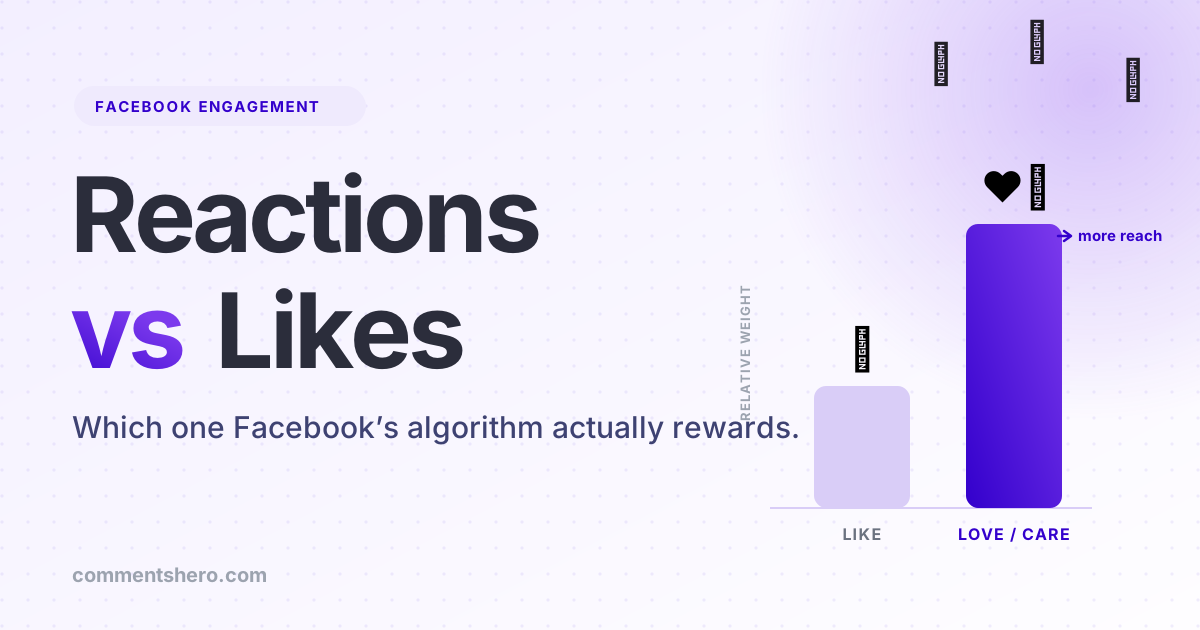
Facebook's algorithm treats comments as a signal roughly five times more valuable than a like. That's not a rumor — Meta's own ranking documentation confirms that "meaningful interactions," specifically comments and replies, push content into more feeds. So every post that collects likes but no comments is essentially invisible to new audiences. You're preaching to the choir and getting smaller every week.
The fix isn't one magic tactic. It's a combination of post architecture, timing, and the psychological triggers that make someone feel compelled to respond. Here's how to actually do it.
Why Likes Are a Dead End for Reach

A like is a closed loop. Someone sees your post, feels a mild positive reaction, taps the button, and scrolls on. Nothing about that interaction pulls them back or signals to Facebook that the content sparked genuine interest. Comments, on the other hand, create a thread — and threads keep people on the platform longer, which is exactly what Facebook wants to reward.
The Passive Audience Problem
Most pages have an audience that's trained to lurk. They followed you months ago, they see your posts, they occasionally like something — but they've never been given a real reason to speak up. This is a conditioning problem, not an audience quality problem. If your last 20 posts asked nothing of your followers, they've learned their role: silent observer. Breaking that pattern requires a deliberate reset, not just one question tacked onto the end of a caption.
Understanding why your posts aren't generating responses is worth examining before you change anything — the breakdown often reveals whether the issue is content, timing, or audience mismatch. Once you've diagnosed it, you can start engineering posts that demand a response rather than hoping for one.
Engagement Signals and Feed Priority
When two people comment back and forth under your post within the first 30 minutes of publishing, Facebook reads that as a high-value conversation and starts showing the post to friends of those commenters. That's organic reach generated by conversation — and it compounds. A post with 8 genuine comments in the first hour will almost always outperform a post with 80 likes and silence. Understanding the mechanics behind why posts go quiet helps you design content that interrupts that silence from the start.
Post Structures That Force a Response

The single biggest lever you control is how you end your post. Most captions trail off with a statement. Statements don't generate comments — questions do, but only specific ones. "What do you think?" generates almost nothing. "Which would you pick: the $40 option or the $120 option — and why?" generates real answers because it offers a binary choice that's easy to engage with and invites elaboration.
The Two-Option Trigger
Give your audience exactly two camps to belong to. "Team A or Team B?" "Early bird or night owl?" "Pay monthly or pay upfront?" People love declaring a side, and once they've declared it, they often defend it — which means reply threads. Specific post formats built around this binary structure consistently outperform open-ended questions by a wide margin. Use this in both organic posts and paid campaigns.
The Incomplete Story
Post something that's clearly missing a piece. "We tested three versions of our product last week. Two flopped completely. One surprised us. Drop a 🔥 if you want to know which one." Now your audience has to participate to get the payoff. Curiosity gaps convert passive scrollers into active commenters because the brain genuinely dislikes unfinished information — it's called the Zeigarnik effect, and it works on Facebook just as well as it does in email subject lines.
Pro tip: Reply to every comment within the first 60 minutes of posting. Your own replies count as engagement signals and keep the thread active in the algorithm's eyes. Set a phone reminder the moment you publish.
Turning Ad Campaigns Into Comment Engines

Paid posts follow the same psychological rules as organic ones, but you have additional levers: audience targeting, ad copy structure, and creative format. Most advertisers optimize for clicks or conversions and completely ignore comment volume — which is a mistake, because a highly-commented ad gets shown more broadly and builds social proof that reduces skepticism in cold audiences.
Comment-Optimized Ad Copy
Write ad copy that ends with a direct, low-friction prompt. "Tag someone who needs this" works because it's socially motivated — people enjoy being the one who surfaces something useful for a friend. "Tell us your city and we'll tell you if we deliver there" works because it's transactionally useful. Ads built around this kind of utility-driven comment prompt regularly see comment rates three to four times higher than standard call-to-action copy.
Seeding Initial Comments on Ads
A new ad with zero comments looks unproven. Social proof is real — people are far more likely to engage with content that already has engagement. Seeding an ad with an initial wave of genuine, relevant comments gives it social momentum. Strategically adding real comments early in a campaign can be the difference between an ad that dies in testing and one that the algorithm pushes hard. This isn't about faking popularity; it's about giving the algorithm enough signal to work with before your budget runs out.
If you want to go deeper on this approach, custom comments tailored to your specific ad context are more effective than generic ones because they read as authentic conversation rather than noise.
Timing, Frequency, and the Comment Momentum Window
Posting at the wrong time is like throwing a party when everyone's asleep. Facebook Insights will show you exactly when your specific audience is online — check the "Posts" tab and look at the hourly breakdown. For most business pages, the window between 7–9 PM local time on Tuesday through Thursday outperforms Monday and weekend posts by 20–35% in comment volume. That's a starting point, not a rule — your audience may be different, and the only way to know is to test.
Post frequency matters too. Pages that post once a day consistently generate more total comments per week than pages that post five times a day and dilute their own reach. Facebook penalizes pages that post too frequently by showing each individual post to a smaller slice of followers. Three to four posts per week, each engineered for comments, will outperform daily posting of filler content every time.
For product-specific pages — fashion brands, leather goods, event professionals — the comment triggers are slightly different because the audience has aesthetic and aspirational motivations. Product posts that generate comments tend to ask about personal experience or preference rather than just showcasing the item.
Responding in Ways That Multiply Comments

How you respond to the first five comments on any post determines whether you get fifty. A one-word reply kills the thread. A reply that asks a follow-up question extends it. If someone comments "I'd pick the $40 option," don't just heart it — reply with "Interesting! What made you go lower — budget or just not needing the extra features?" Now they have a reason to come back, and others watching the thread see an active conversation worth joining.
Pinning Strategic Comments
Facebook lets page admins pin a comment to the top of the thread. Use this deliberately. Pin a comment that models the kind of response you want others to give — something specific, enthusiastic, and on-topic. New visitors to the post see that pinned comment first and unconsciously calibrate their own response to match its tone and depth. It's a subtle form of social norming that genuinely moves the needle.
For pages that rely heavily on photo content, emoji-based comments on photos can serve as lightweight conversation starters that lower the barrier for less verbal audiences to participate — which then opens the door for text-based replies from others.
Frequently Asked Questions

Does boosting a post hurt its organic comment potential?
Not inherently, but the audience targeting matters enormously. If you boost to people who already like your page, you're paying to reach an audience that's already seen your content and chosen not to comment. Boosting to a cold but well-targeted audience — one that matches your best existing commenters — often generates more comment activity because those people are encountering your content fresh and without the "I've already seen this" fatigue that suppresses engagement among existing followers.
My audience comments on personal profiles but not my business page — what's different?
Business pages feel formal to most users. People comment freely on personal posts because the social stakes feel low and the relationship feels direct. Closing that gap means writing in a genuinely personal voice, sharing behind-the-scenes content that feels unpolished, and occasionally posting from a personal profile and linking back to the page. The moment your page starts feeling like a person rather than a brand, comment rates shift noticeably — usually within two to three weeks of consistent tone change.
Is there a comment count that signals to the algorithm to push a post significantly further?
There's no publicly confirmed threshold, but data from multiple page audits consistently shows a pattern: posts that hit 10 or more comments within the first two hours see a measurable spike in organic reach — sometimes 3x to 5x the baseline. Research into comment thresholds suggests that 25–30 comments is where a post starts attracting comments from people who weren't originally in your audience, because Facebook begins surfacing it as "popular content" to friends of commenters. Getting past that first 10-comment mark quickly — whether through strong post engineering or strategic seeding — is worth prioritizing on your highest-value content.
The gap between a like and a comment is really the gap between someone who noticed you and someone who chose to engage with you. Every technique here is designed to make that choice easier — to give your audience a reason, a prompt, or a moment of genuine curiosity that makes typing a response feel natural rather than effortful. Start with one post this week built entirely around a two-option question, reply to every comment within the hour, and watch what the algorithm does with a thread that actually moves.
Want a faster start on that first thread? Some pages buy Facebook comments to get the conversation moving right away.