
An e-commerce retailer spent weeks preparing a major product launch, crafting high-quality graphics and polished copy. When the post went live, the team waited for the usual influx of customer inquiries and shares. Instead, they were met with complete silence—not a single comment, share, or click for hours. This scenario is increasingly common for brands navigating the modern social media landscape. In an era dominated by smart feeds and intense brand competition, organic reach has declined, leaving page owners wondering how to break through the noise. This definitive guide breaks down the mechanics of the news feed algorithm and delivers fifteen actionable strategies to revitalize your organic visibility.
What is Facebook Engagement (and Why is it Declining?)
At its core, Facebook engagement refers to any action a user takes on your page or content. This includes active interactions like comments, shares, reactions, and link clicks, as well as passive behaviors like video views and post saves. Every interaction acts as a direct signal to the news feed algorithm, indicating that your content holds value. The more engagement a post receives, the wider the system distributes it across other users' feeds.
Over the past several years, organic reach for business pages has gradually declined, often hovering between 1% and 5% of a page's total follower base. This decline is not due to a drop in overall user interest, but rather the result of a crowded ecosystem. With billions of posts uploaded daily, the news feed algorithm must filter content aggressively to maintain a positive user experience. Today, the system prioritizes "meaningful social interactions"—favoring active conversations over passive content consumption.
To succeed in this environment, brands must shift away from broadcasting and focus on community-building. If your reach has flatlined, you can review our diagnostic guide on why your Facebook posts get no comments to identify specific bottlenecks in your posting strategy. Once you understand the root causes of low interaction, you can implement a structured approach to rebuild your organic distribution channels.
How to Calculate Your Facebook Engagement Rate
You cannot improve what you do not measure, and tracking your page's performance is essential for long-term growth. The most reliable metric for evaluating content performance is the Facebook engagement rate. This percentage measures the volume of interactions your content receives relative to the size of the audience that viewed it. Calculating this rate allows you to identify your top-performing formats and adjust your calendar accordingly.
To calculate this metric, use the standard engagement rate formula:
Engagement Rate % = (Total Interactions / Reach) x 100
For example, if a post reaches 10,000 users and receives a total of 500 reactions, 100 comments, and 100 shares, your calculations would look like this:
Total Interactions = 500 + 100 + 100 = 700
Engagement Rate % = (700 / 10,000) x 100 = 7%
This means 7 out of every 100 users who saw the post actively interacted with it. While a 7% engagement rate is exceptionally high, the median rate across most industries sits between 0.03% and 0.10%. Evaluating your scores against these benchmarks helps you determine if your content is resonating with your target demographic.
15 Proven Ways to Boost Facebook Page Engagement
Reversing a decline in engagement requires a mix of timing, media formats, copywriting techniques, and active community management. Here are fifteen proven strategies to optimize your page and drive consistent interactions.
1. Optimize Your Posting Times for Active Hours
Timing remains a critical factor in feed visibility. Even a high-quality post can fail if it is published while your audience is offline. To maximize initial traction, you must schedule your updates during peak activity windows when your followers are actively scrolling. Check the optimal windows in our guide on the best time to post on Facebook to align your publishing calendar with your audience's daily habits.
2. Prioritize Vertical Short-Form Video and Reels
Short-form video is the fastest-growing format on the platform, accounting for nearly 30% of all user watch time. The algorithm heavily favors native video uploads, recommending them to users who do not even follow your page yet. To capitalize on this algorithmic push, ensure you are following the standard Facebook Reels best practices, such as uploading vertical files directly and keeping video lengths under sixty seconds.
3. Ask Conversational Questions Instead of Sales Pitches
Users visit social media to connect and converse, not to read continuous advertisements. If your feed consists solely of product links, engagement will dry up. Instead, ask open-ended, relevant questions that invite your followers to share their experiences. Writing interactive posts that demand a reply is the easiest way to spark active comment sections.
4. Leverage Literal and Concise Image Alt Text
Accessibility is a key ranking signal that also improves user experience. When uploading images, always provide literal, descriptive alt text for visually impaired users. Avoid stuffing keywords or explaining "symbolism" in these tags. Keep them concise and direct, describing the exact visual elements present in the graphic.
For example, you might use these literal alt text structures:
alt="A close-up photo of a leather laptop sleeve on a wooden desk next to a coffee cup"alt="An infographic displaying step-by-step instructions for resetting the Facebook algorithm"alt="A smartphone screen showing a Facebook comment thread search feature"
5. Share User-Generated Content (UGC) to Build Social Proof
People trust recommendations from other real people far more than polished corporate graphics. Sharing photos, videos, and reviews created by your customers provides powerful social proof. UGC humanizes your brand, encourages other followers to share their own experiences, and drives higher interaction rates than standard product listings.
6. Build Community with Facebook Groups
Facebook Groups are designed around shared interests, making them highly active hubs for engagement. By hosting a branded group, you create a private space where your most passionate customers can interact with each other. This direct community engagement builds long-term loyalty and drives traffic back to your business page.
7. Use the "Fill-in-the-Blank" Copywriting Hook
Copywriting formulas play a major role in getting users to stop scrolling. One of the most effective patterns is the "fill-in-the-blank" prompt, which requires minimal effort from the reader. For instance, a simple prompt like "My favorite weekend activity is _____" naturally invites quick replies. You can study tested Facebook hooks that spark replies to build library templates for your content calendar.
8. Trigger Dialogues by Replying to Every Comment
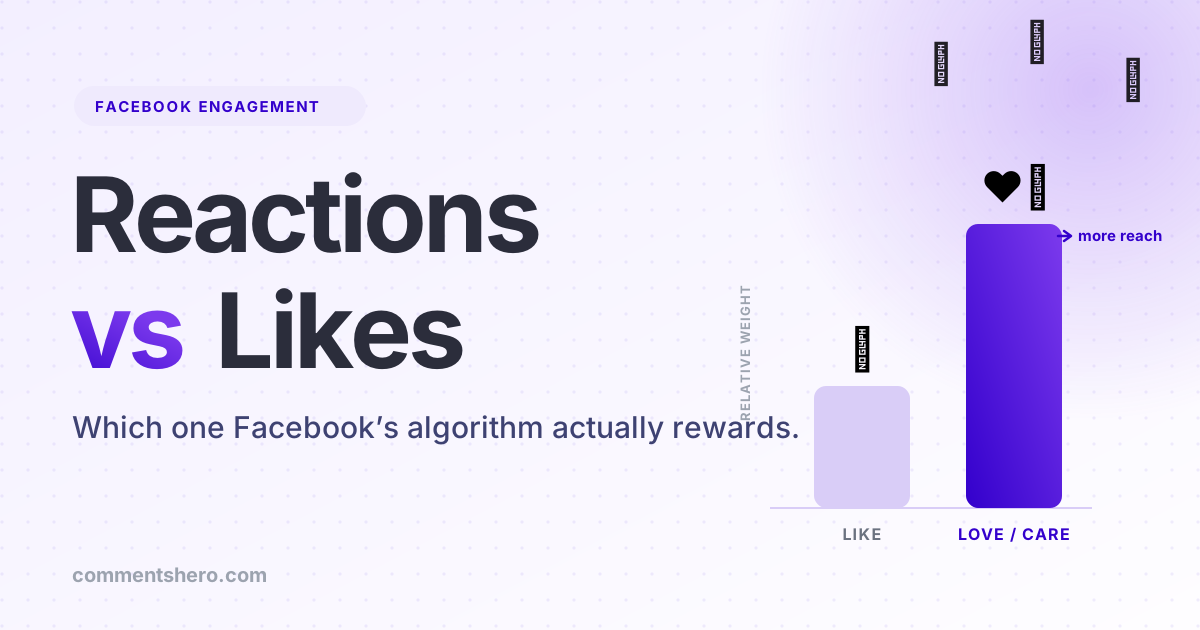
If someone takes the time to write a response on your post, you must acknowledge them. Replying to user comments double the size of your comment section and signals to the algorithm that an active discussion is occurring. These reply loops keep your posts visible in the news feed for a longer period. If you notice a high volume of reactions but few discussions, you can use strategic reply prompts to turn Facebook likes into real comments.
9. Avoid Algorithmic Downranking (Don't Engagement Bait)
It can be tempting to explicitly ask users to "like this post if you agree" or "tag a friend who does this." However, Facebook classifies these empty requests as "engagement bait" and actively penalizes pages that use them. The algorithm detects patterns that demand reactions, comments, or shares solely to game the system and downranks those posts. Focus on creating authentic, value-driven content that naturally inspires users to share their thoughts.
10. Run Targeted Giveaways and Competitions
Running a contest is a fast way to generate a surge of engagement. Ensure your entry mechanics comply with the platform's guidelines and encourage genuine interaction. Instead of asking for random tags, ask users to share a story or vote on a product design in the comments. This ensures the resulting activity signals high-quality interest to the algorithm.
11. Implement Employee Advocacy Toolkits
Your team members are your best brand advocates. When employees share company updates and behind-the-scenes content with their personal networks, it expands your organic reach. Provide your staff with pre-approved social sharing toolkits containing graphics and template copy to make it easy for them to amplify your brand's message.
12. Tap into Niche Influencer Collaborations
Partnering with niche influencers allows you to access established, highly engaged communities. Collaborating on co-branded posts or hosting guest takeovers introduces your brand to fresh audiences. Ensure the influencers you select align with your core values and have genuine, interactive followings.
13. How to Safely Reset Your Facebook Algorithm
If your organic reach has collapsed entirely, your page feed may be stuck in an algorithmic rut. You can "reset" your algorithm by adjusting your engagement patterns. Start by unfollowing inactive pages, updating your target audience preferences, clearing your app cache, and changing your posting frequency. This forces the system to re-evaluate your content scoring models and refresh your distribution loops.
14. Establish Trust with Meta Verification Badges
Credibility is a critical factor in user interaction. A Meta Verified blue badge signals to visitors that your business is authenticated and trustworthy. This badge helps your page stand out in comments sections and search results, making users feel safe when engaging with your updates.
15. Cross-Platform Repurposing (Repackage Your Winners)
Do not let your best content go to waste after a single post. If a vertical video performed exceptionally well on another network, repackage it as a Facebook Reel. Repurposing proven content allows you to maintain a consistent posting schedule without running out of creative assets.
The Admin's Shortcut: Overcoming the "Empty Room" Dilemma
One of the hardest parts of scaling a business page is overcoming the "empty room" effect. Organic visitors are often hesitant to leave the very first comment on a quiet thread. To break the ice and build trust, page managers can leverage the services of CommentsHero to establish an initial foundation of visual activity.
To drive authentic engagement and safely build social proof without triggering algorithmic penalties, admins can choose to buy custom facebook comments tailored to their specific campaign. Generating a baseline of custom-worded comments from real profiles makes organic visitors feel safe to join the conversation. This baseline makes it easier to distribute link authority, helping you run high-converting campaigns and manage your page growth effectively.
For paid acquisition campaigns, you can also use these tools to boost comment rates on Facebook ads, helping to build social proof directly on your ad creative, raise your click-through rates, and lower your average cost-per-click. Combined with consistent moderation, knowing the best practices for handling negative comments on Facebook ads ensures your brand reputation remains protected while scaling conversions.
Frequently Asked Questions (FAQ)
What is a good Facebook engagement rate?
While average engagement rates vary by industry, the global median across all industries typically sits between 0.03% and 0.10%. Pages that consistently post vertical video, respond to comments, and avoid promotional spam can achieve rates between 1% and 3%, which is considered excellent for organic pages.
Does boosting posts help organic reach?
Boosting a post paid-promotes your update to a wider targeted audience, which drives a rapid increase in reactions and comments. This activity can indirectly boost your organic reach, as the algorithm notes the high volume of interactions and pushes the post to more of your organic followers' feeds.
How do I check my Facebook Page engagement metrics?
You can check your performance metrics by visiting Meta Business Suite and navigating to the Insights dashboard. This panel displays detailed charts on reach, link clicks, page likes, and specific post interactions, helping you analyze which content formats are performing best.
Conclusion & Strategic Roadmap
Boosting your Facebook engagement requires consistent optimization, high-quality media formats, and active community participation. Start by auditing your posting schedule, clearing out low-value content, and replying to every comment on your wall. By prioritizing conversational value and utilizing structured social proof tools, you can successfully bypass algorithmic filters and scale your organic reach.