


Short version: a Reaction generally counts for more than a plain Like — especially Love and Care — because tapping past the default takes a beat of intent. But “more” isn’t the whole story. What actually moves a post is when the engagement lands and whether it comes with comments. This guide breaks down how Facebook weighs each reaction, when a Like is still fine, and how to earn the heavier signals on purpose.
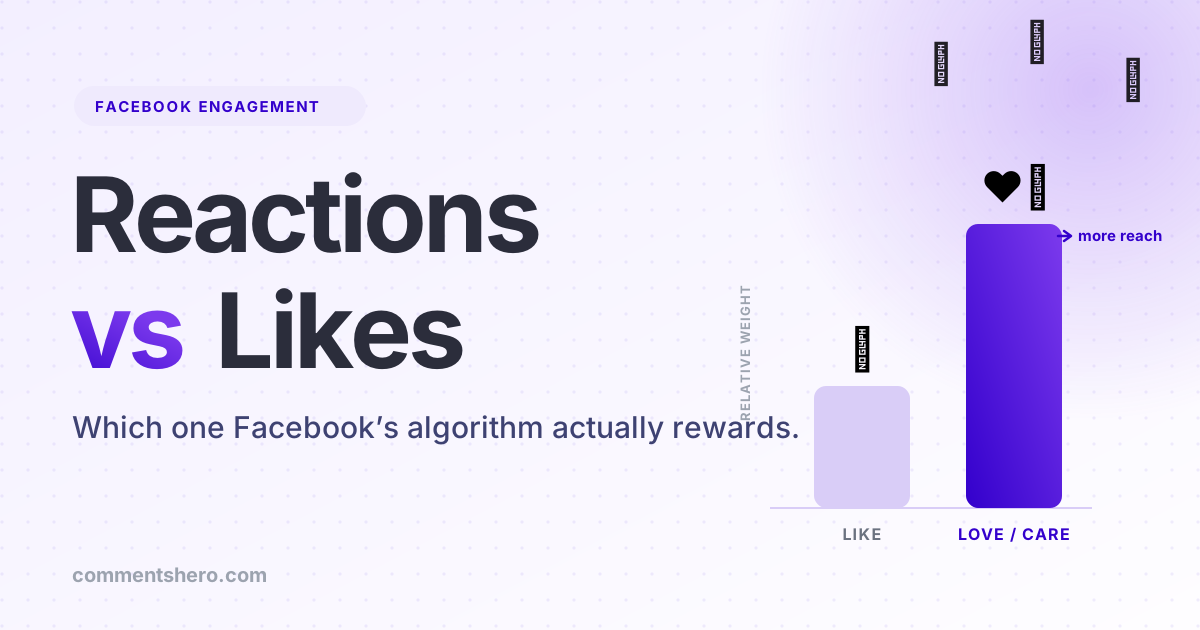
- Weight order (roughly): Love / Care > Wow / Haha / Sad / Angry > Like. A comment outranks all of them.
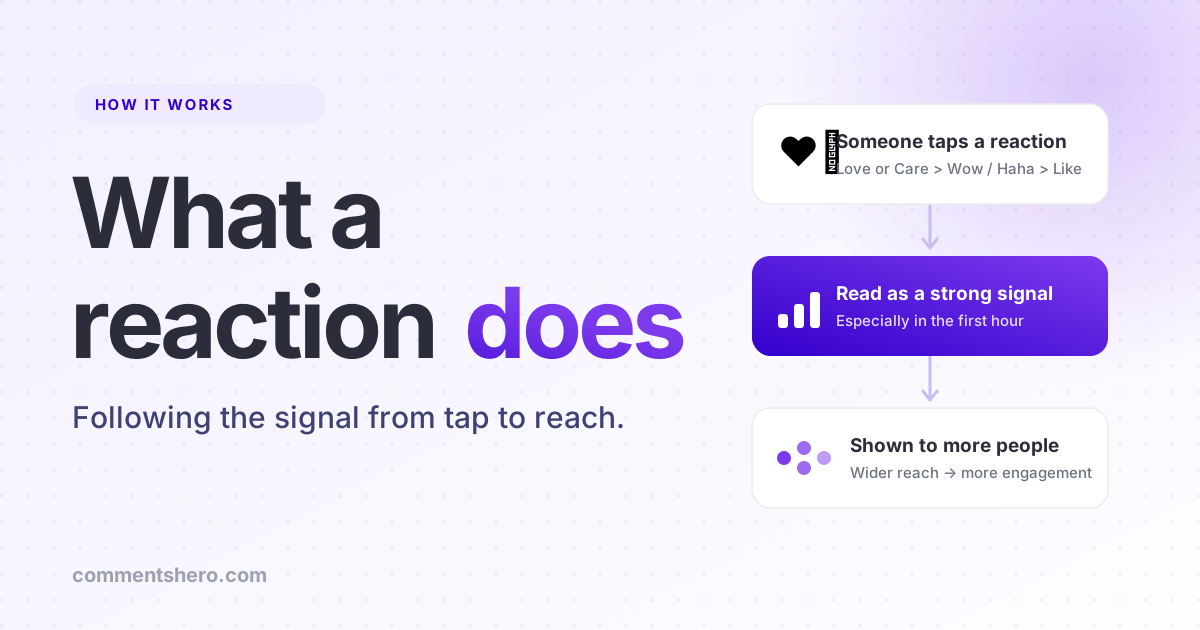
- The first hour after publishing is where engagement counts most — a Love in minute five is worth more than ten Likes the next day.
- A post that only ever gets Likes is quietly telling Facebook “mild approval, nothing more.”
- You can nudge the heavier signals: better hooks, asking for a specific reaction, or seeding a natural reaction mix in the early window.
The short answer
Facebook has said for years that reactions are weighted more heavily than Likes, because choosing Love, Wow or Angry is a stronger expression than the one-tap default. Internally-reported multipliers have shifted over time and Facebook doesn’t publish exact numbers, but the direction has been consistent across every leak and official comment: emotional reactions pull more distribution than a Like, and Love/Care sit at the top.
So if you’re choosing what to optimise for, aim for reactions over bare Likes. Just don’t treat it as a magic multiplier — the timing and the comment layer matter at least as much.
How Facebook weights each reaction
| Response | Relative pull on reach | What it signals |
|---|---|---|
| Like | Baseline | Low-effort approval — “seen it, fine” |
| Love / Care | Highest of the reactions | Strong positive feeling — the signal Facebook most wants to spread |
| Wow / Haha | High | The content genuinely surprised or amused someone |
| Sad / Angry | High, but context-sensitive | Emotional pull — valuable on news/cause posts, a red flag on promos |
| Comment | Above every reaction | Willing to spend time — the strongest organic signal there is |
| Share | Very high | Willing to put their own name on it |
The practical read: a healthy post earns a base of Likes for volume, a visible layer of Love/Care for weight, and a handful of comments to carry the conversation. We walk through building that mix in our guide to boosting Facebook engagement.
Why the difference exists
It comes down to effort and intent. A Like is muscle memory — people tap it while barely reading. Picking Love means holding the button, waiting for the tray, and choosing. That tiny extra friction is exactly why Facebook treats it as a truer signal of “this mattered to me,” and why it’s willing to show that post to more people.
The same logic explains the whole ladder: reactions beat Likes, comments beat reactions, shares beat comments. Each step up the ladder costs the user a little more, so each one tells the algorithm a little more.
When a Like is actually fine
Reactions aren’t always the goal. A Like is the right ceiling for:
- Utility posts — hours, links, quick announcements. Nobody “Loves” your opening times, and that’s okay.
- High-frequency content where you just want steady, low-friction acknowledgement.
- Anything where a stronger reaction would feel forced. Begging for Love on a mundane post reads as try-hard and tends to backfire.
Save the push for reactions for posts that can actually earn a feeling — wins, stories, striking numbers, before-and-afters.
The part people miss: the early-engagement window
Whether a response is a Like or a Love matters far less than when it arrives. Facebook decides how far to push a post largely on how it performs in its first 30–60 minutes with the initial slice of audience it’s shown to. Strong early engagement → wider distribution → more engagement. A flat start is very hard to recover from later.
Do this: post when your audience is active, then make sure the first hour isn’t empty — reply to early comments, and if the post matters, seed a small, natural mix of reactions right after publishing rather than hoping it catches on its own.
How to earn more reactions (not just Likes)
- Open with a feeling, not a fact. “We almost didn’t make it this year…” earns Care; “Q3 results are in” earns a scroll.
- Ask for the specific reaction. “Drop a ♥️ if this hit home” measurably lifts Love rates.
- Show a face or a result. People react to people and to proof, not to stock graphics.
- Post the story, not the summary. Detail creates the emotional pull that turns a Like into a Wow.
- Reply fast. Early replies keep a post alive through the window that decides its reach.
The shortcut: seeding reactions in the early window
If a post genuinely deserves reach, you don’t have to leave the critical first hour to chance. Adding a small, believable mix of reactions from real profiles — drip-fed, not dumped — gives the post the early momentum the algorithm reads as “this is catching on,” and makes real people more likely to stop and add their own. That’s the whole idea behind buying Facebook reactions; our full walkthrough of how to do it safely is in the practical guide to buying Facebook reactions.
Keep the ratio believable. Reactions with zero comments on a big number looks bought. If you’re seeding reactions at scale, add a few comments so the engagement mix reads normally.
Reactions vs Likes vs comments: the hierarchy
If you only remember one thing, remember the order:
- Comments — the heaviest organic signal. Even short ones. This is why turning passive likes into real comments is such a reliable lever.
- Reactions — Love and Care first, then Wow/Haha. Cheaper and faster to earn than comments, and enough to make a post look alive.
- Likes — useful volume, low weight. A fine floor, a poor ceiling.
For most posts, the best-value play is a base of reactions with a few comments on top — it covers both the “looks active” and the “has a conversation” boxes that Facebook checks.
Frequently Asked Questions
Do Facebook reactions really count more than Likes?
Yes. Facebook weights emotional reactions — Love and Care most of all — more heavily than a plain Like, because choosing a reaction takes more intent. Exact multipliers aren’t published and have changed over time, but the ranking has stayed consistent.
Which Facebook reaction is worth the most?
Love and Care carry the most weight, followed by Wow and Haha. Sad and Angry also pull strongly but only fit certain content — using them on a promotional post can hurt more than help.
Is it better to get 100 Likes or 20 Loves?
Twenty Loves usually does more for reach, and looks more compelling to real viewers. But the strongest result is a blend: Likes for volume, Loves for weight, plus a few comments.
Does asking people to react actually work?
Yes — a clear, specific prompt (“drop a ♥️ if…”) reliably lifts reaction rates versus a post with no call to action, as long as the content earns it.
Can I just buy reactions instead of Likes?
You can, and for most posts it’s the better choice — reactions carry more weight and make a post look more active. Order a natural mix from real profiles on the reactions order form, ideally in the first hour after posting.
Do reactions matter more than the timing of engagement?
No — timing usually wins. Strong engagement in the first 30–60 minutes influences distribution more than whether those responses were Likes or Loves. Aim for both: heavier signals, earlier.