

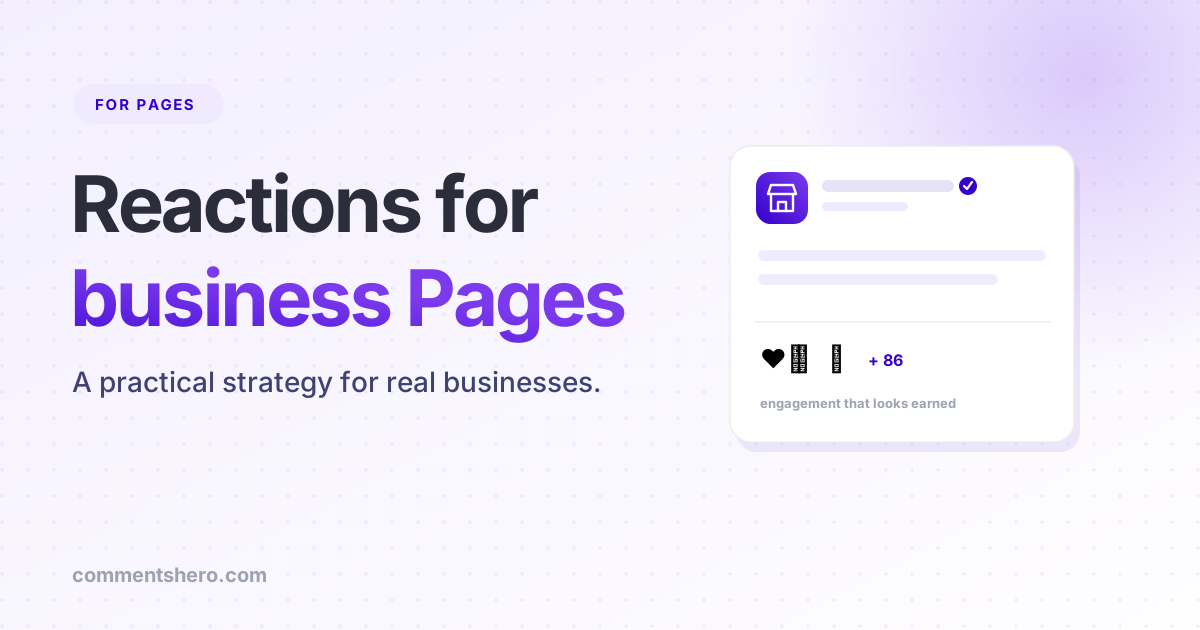
Business Pages have a specific reactions problem: organic Page reach is low, most posts look inactive, and ad spend behind a bare post converts worse than it should. Reactions are the cheapest fix for all three — they make a post look alive, feed the ranking system a positive signal, and give a promoted post social proof. This is a practical reactions strategy built for real businesses, not influencers.
- Pages start colder than personal profiles — no friend network to carry the first hour — so early signals matter even more.
- The content that earns reactions for a business: customer stories, the team, concrete results, gratitude, and anything local.
- Put reactions on a post before you boost it — social proof lifts ad performance.
- For posts that deserve reach, a small reaction seed from real profiles closes the first-hour gap — safely, done right.
Why Page reach is harder
Organic reach for Pages has been declining for a decade, and a Page doesn’t have a personal network of friends whose early engagement kick-starts distribution. When you post from a Page, the first-hour audience is small and passive by default. If those first viewers only scroll or Like, the post is done before it reaches anyone who’d have reacted. Everything below is about winning that first hour.
The content that earns reactions for a business
- Customer stories. “A customer drove two hours because…” — specific, human, reaction-friendly.
- The people behind the business. A real photo of the team or the owner, with a short line about them.
- Concrete results. A before-and-after, a number, a finished job — next to a photo, not on a template.
- Gratitude posts. Thanking customers or staff by name reliably earns Care and Love.
- Local moments. The community event, the local landmark, the “we’re from here” angle.
What doesn’t earn reactions: pure promotions, link dumps, and anything that reads like a press release. Those get Likes at best.
A weekly Page cadence
- Two “feeling” posts a week — one story, one result or gratitude post — alongside your normal content and offers.
- Write the first line last, after the post exists, and make it a feeling, not a headline.
- One reaction prompt on each of those two posts, matched to the emotion.
- Publish into your active window (check Page insights) and block the next hour for replies.
- Review monthly: which posts earned reactions vs. just Likes, and do more of that.
More on building the habit: how to get more reactions on Facebook posts and our engagement guide.
Reactions before you boost a post
A promoted post with visible reactions converts better than a bare one — the reactions are social proof for the cold audience your ad money is buying. The efficient sequence for a Page:
- Publish the post and seed engagement in the first hour (organically, or with a small drip).
- Let it settle for a day so the reaction count and any comments are real and visible.
- Then put budget behind it. You’re now paying to amplify something that already looks worth engaging with.
Seeding for Pages: the safe way
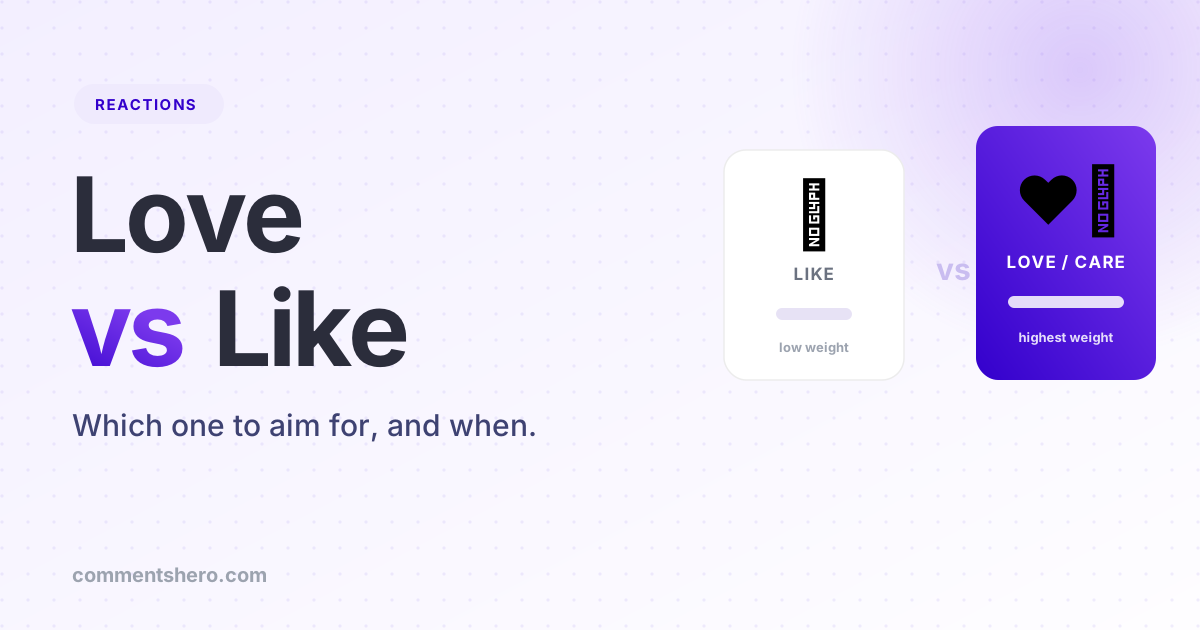
Because a Page’s first hour is so quiet, leaving it to chance is the weak point. A small, believable mix of reactions from real profiles — drip-fed, not dumped, scaled to your Page size — gives the ranking system the early positive signal it needs, and makes real viewers more likely to react too. Keep it modest (25–75 on a small Page, 100–250 on a larger one), keep the ratio to comments believable, and never share login details. Full detail: the practical guide to buying Facebook reactions and is it safe to buy reactions. Order the mix on the reactions form, and add a few comments on bigger posts.
How this looks by industry
- Dentists and clinics: patient results and team photos beat “book your check-up” posts — see Facebook marketing for dentists.
- DJs and event pros: crowd shots and “this happened last night” posts earn Wow — Facebook marketing for DJs and event pros.
- Fashion and leather brands: the craft, the detail, the maker — post engagement for fashion and leather brands.
- Digital-product sellers: the result a buyer got, in their words — selling digital products on Facebook.
Frequently Asked Questions
Do reactions actually help a business Page’s reach?
Yes. Reactions feed Facebook’s engagement prediction, and Pages need that signal more than profiles do because they start each post with a small, passive audience. Reactions in the first hour are what widen distribution.
What kind of business posts get the most reactions?
Customer stories, photos of the team or owner, concrete before-and-after results, gratitude posts, and local-angle content. Promotions and link posts earn Likes at best.
Should I buy reactions for my business Page?
It can be worth it for posts that deserve reach but stall in a quiet first hour. Keep orders modest and scaled to your Page, use real profiles with drip delivery, never share login details, and treat it as a nudge — not a way to fake a viral post.
Is it better to buy reactions or run an ad?
They work together. Reactions make a post look worth engaging with; ads buy reach. Seed engagement first, let it settle, then boost the post so your ad spend amplifies something that already has social proof.
How many reactions should a business Page post have?
Relative to your Page. On a small Page, 20–75 reactions changes how a post reads; on a larger Page, 100–250. Aim for “this caught on,” and keep some comments in the mix so it looks earned.