


Getting more reactions on Facebook comes down to three things: give people a feeling to respond to, make the ask explicit, and make sure the post isn’t sitting empty during the window that decides its reach. None of that requires a bigger following — it’s mostly about how you write the first line and what you do in the first hour. Here’s the full playbook.
- Emotion earns reactions; information earns scrolls. Open with the feeling, not the summary.
- Ask for a specific reaction (“drop a ♥️ if…”) — a clear prompt reliably lifts reaction rates.
- The first 30–60 minutes matter most. Post when people are around and don’t leave it silent.
- If a post deserves reach, you can seed a small, natural mix of reactions to break the cold start.
Why chase reactions, not just likes
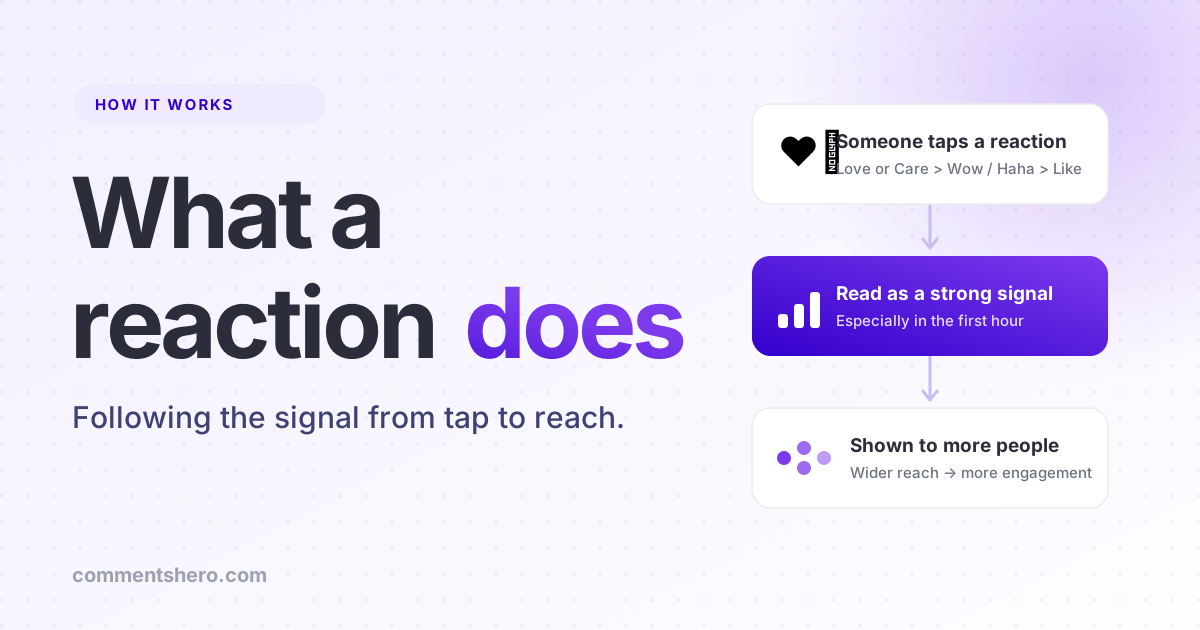
A Like is muscle memory; a reaction takes a beat of intent, so Facebook treats it as a stronger signal and pushes those posts further. Love and Care carry the most weight, then Wow and Haha, then Like. We break the ranking down in Facebook reactions vs likes — but the practical takeaway is simple: a post that earns feelings travels further than one that earns thumbs.
1. Lead with a feeling, not a fact
The first line decides everything. Compare:
- “Our Q3 numbers are in.” → scroll.
- “Six months ago we nearly shut this down. This week we hit our best month ever.” → Care, Love, Wow.
Same news, completely different response. People react to stakes, relief, surprise, pride and frustration — not to headlines. Before you post, ask: what should someone feel reading this? If you can’t answer, rewrite the opening until you can.
2. Ask for the reaction you want
Facebook users do what you tell them to, if you make it easy. A specific, low-effort prompt near the end of the post works far better than hoping:
- “Drop a ♥️ if you needed to hear this today.”
- “😮 if this surprised you too.”
- “React with 💕 if you’re in.”
One ask per post. Match the reaction to the emotion you built — don’t ask for Love on a post that earns Wow. And don’t do it on every post, or it stops landing.
3. Use formats that actually pull reactions
Some post shapes are reaction machines. Rotate through these:
- The origin / near-miss story. “We almost…” — earns Care and Love.
- Before & after. A visible transformation earns Wow.
- The milestone with a face. A real photo of the person or team behind it, not a graphic with a number.
- The honest hot take. A clear, defensible opinion earns Love from the people who agree and pulls comments from the ones who don’t.
- The small win nobody sees. “A customer drove two hours to…” — specific, human, reaction-friendly.
- Gratitude posts. Thanking customers or staff by name reliably earns Care and Love.
What doesn’t work: pure announcements, link dumps, and anything that reads like a press release.
4. Land your engagement in the first hour
Facebook shows a new post to a small slice of your audience first, then decides how far to push it based on how that slice responds — mostly within 30–60 minutes. Strong early reactions and comments → wider reach. A flat first hour is very hard to recover from.
Practical version: post when your audience is actually online (check your Page insights), then protect that first hour — be at your desk, reply to every early comment, and don’t publish right before you disappear for the day.
5. Make the first move yourself
Empty posts stay empty — people hesitate to be the first to react. Prime it:
- React as the Page to your own post (a Love or Care), so the count isn’t zero.
- Reply to the first comment fast and ask a follow-up question — it keeps the thread moving through the window that matters.
- Ask two or three people — team, friends, loyal customers — to engage genuinely in the first few minutes. Not a pod, just a nudge.
6. Give a flat post a running start
Sometimes a post genuinely deserves reach and still won’t catch — wrong time of day, quiet week, small Page. Rather than let the window pass, you can add a small, believable mix of reactions from real profiles, drip-fed over a few hours so it looks like natural discovery. That early momentum is what the algorithm reads as “this is working,” and it makes real people more likely to stop and add their own.
That’s the entire idea behind buying Facebook reactions. If you go that route, do it right: real accounts, a natural Like/Love/Wow spread, timed to the first hour, and — on bigger orders — a few comments so the ratio stays believable. Our full walkthrough is in the practical guide to buying Facebook reactions.
A simple weekly rhythm
- Plan two “feeling” posts a week — a story and a win — alongside your normal content.
- Write the first line last, after the post exists, so you can sharpen the hook.
- Add one reaction prompt to each of those two posts.
- Publish at a known-active time and block the next hour for replies.
- Check insights weekly: which posts earned reactions vs. just Likes, and do more of that.
More on building a repeatable engagement habit in our Facebook engagement guide.
What kills reactions
- Burying the feeling under context and hashtags before the reader gets to it.
- Posting and leaving. No replies in the first hour tells Facebook the post is done.
- Asking for everything — react, comment, share, tag, save — in one post. Pick one.
- Reaction-baiting with no substance (“React ♥️ if you love Fridays!”). It works once, then your reach drops.
- Graphics instead of faces. A number on a branded template earns far fewer reactions than the same number next to a real photo.
Frequently Asked Questions
How do I get more reactions on Facebook without more followers?
Focus on the opening line and the first hour, not audience size. Lead with an emotion, add one specific reaction prompt, post when your existing audience is active, and reply to early comments. Those levers work at any follower count.
Does asking people to react actually work?
Yes. A clear, single, low-effort prompt (“drop a ♥️ if…”) placed near the end of a post reliably increases reaction rates — as long as the content earns the feeling you’re asking for.
Which type of post gets the most reactions?
Story-driven posts with real stakes — near-misses, milestones, before-and-afters, and gratitude posts — consistently out-react announcements and link posts. A real photo of a person beats a branded graphic.
Why do my posts get likes but almost no reactions?
Usually the opening is informational rather than emotional, so people give the low-effort response. Rewrite the first line around a feeling, add a reaction prompt, and make sure the post isn’t going out into a dead hour.
Is it safe to buy reactions to get started?
Buying reactions from real profiles at a natural pace doesn’t trigger Facebook’s spam systems. The risky patterns are instant bulk delivery and obviously fake accounts. Order a realistic mix on the reactions order form and time it to the first hour after posting.
How many reactions should a post have to look “active”?
It’s relative to your Page. On a small Page, 20–50 reactions changes how a post reads; on a larger Page, 100–250. The goal is “this caught on,” not a round number — and the ratio to comments should stay believable.