


Love and Care carry more weight in Facebook’s ranking than a plain Like — so if a post can earn them, that’s what you want. But “aim for Love” only works when the content actually deserves it. Push for Love on a routine update and you get a weak, unconvincing signal. Here’s what each response means, when to aim higher, and when a Like is exactly the right ceiling.
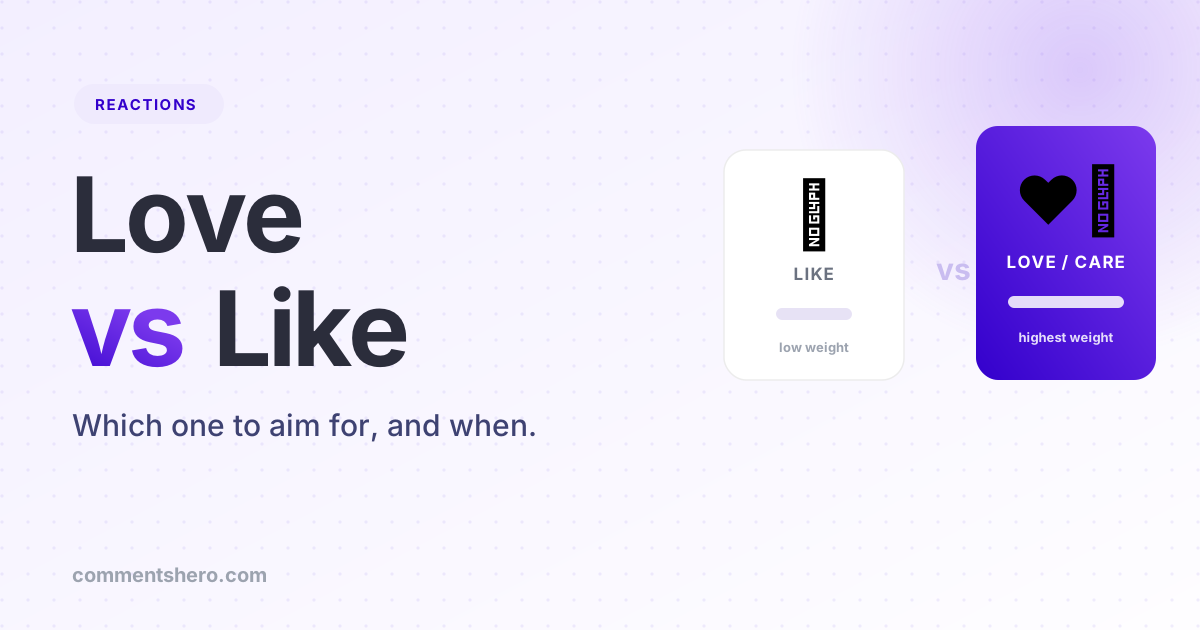
- Like = “I saw it, it’s fine.” Love / Care = “I feel something about this.” Facebook weights the second one higher.
- Aim for Love/Care on stories, wins, milestones and gratitude posts — anything with a real feeling behind it.
- A Like is the right ceiling for utility posts — hours, links, quick announcements. Forcing more looks try-hard.
- You nudge Love instead of Like with a feeling-first hook and one matching prompt, or by seeding a Love-weighted mix on posts that earn it.
What each one signals
- Like — the default, low-effort tap. Acknowledgement, not emotion. People give it while barely reading.
- Love — genuine warmth or enthusiasm. It takes holding the button and choosing, so Facebook reads it as a stronger, more deliberate response.
- Care — empathy and support. Introduced for moments that need more than a Like; it carries similar weight to Love and fits gratitude, hard news handled well, and community moments.
The gap between a Like and a Love isn’t about the icon — it’s about the intent behind the tap, and intent is what the ranking system is trying to measure.
The weight difference
Facebook doesn’t publish exact multipliers and they’ve shifted over the years, but the order has stayed put: Love / Care > Wow / Haha > Sad > Like, with Angry treated cautiously. Twenty Loves generally do more for a post’s reach than a hundred Likes — and they look more compelling to the real people scrolling past. We go deeper on the mechanics in Facebook reactions vs likes.
When to aim for Love or Care
- Origin and near-miss stories — “six months ago we almost…” — earn Care and Love.
- Milestones with a face — a real photo of the person or team, not a number on a template.
- Gratitude posts — thanking customers or staff by name.
- Community and support moments — anything where empathy is the natural response.
On these, a single prompt like “drop a ♥️ if this hit home” measurably lifts the Love rate.
When a Like is the right ceiling
- Utility posts — opening hours, a link, a quick FYI. Nobody Loves your hours, and asking them to is odd.
- High-frequency content where you just want steady, low-friction acknowledgement.
- Anything a stronger reaction would feel forced on. A weak ask trains people to ignore your prompts.
Chasing Love everywhere dilutes it. Save the push for posts that can carry it.
How to nudge Love instead of Like
- Lead with the feeling. “We nearly didn’t make it this year” earns Care; “Q3 results are in” earns a Like at best.
- Ask for the specific reaction, once, near the end — and match it to the emotion you built.
- Show a person. Faces and real moments pull Love; branded graphics pull Likes.
- React as the Page first, so the count isn’t zero and the first mover has cover.
The full step-by-step is in how to get more reactions on Facebook posts.
A 30-second test before you post
Run any draft through these three questions to know whether to aim for Love or settle for a Like:
- Is there a person or a stake in it? A named customer, a team member, a risk that paid off. If yes, it can earn Love or Care. If it’s a fact with no human in frame, expect a Like.
- Does the first line make me feel something, or does it just inform me? Rewrite until the answer is “feel.”
- Would a reaction prompt fit naturally, or would it feel forced? If forced, the post isn’t a Love post — and that’s fine.
Two “yes” answers means it’s worth writing for Love and adding a prompt. Zero or one means let it be a Like post and save your energy for the next one.
Care vs Sad vs Angry: the rest of the tray
Love and Like get the attention, but the middle reactions matter too. Wow and Haha are close behind Love in weight and fit surprising results or genuinely funny posts. Sad can suit sensitive news or a cause update, but it’s an odd fit for a brand post. Angry is the one to be careful with — a pile of Angry reactions on your own content can read as negative feedback and reduce reach, so “rage-bait” rarely pays off for a business Page. When in doubt, aim for the warm end of the tray.
Buying: Love-heavy vs balanced mixes
If you seed reactions on a post, match the mix to the content. A gratitude or milestone post can take a Love/Care-weighted mix with a base of Likes underneath. A product or offer post reads better with mostly Likes and a lighter Love layer — an all-Love spike on a promo looks off. You choose the split on the reactions order form; on bigger orders, add a few comments so the profile stays believable.
Frequently Asked Questions
Is a Love worth more than a Like on Facebook?
Yes. Love (and Care) are weighted more heavily than a plain Like because choosing them takes more intent. The exact multiplier isn’t published and has changed over time, but the ranking order has been consistent.
What’s the difference between Love and Care?
Love signals warmth or enthusiasm; Care signals empathy and support. They carry similar weight. Use Love for wins and enthusiasm, Care for gratitude, community moments, and sensitive news handled well.
Should I always try to get Loves instead of Likes?
No. Aim for Love/Care only when the post has a genuine feeling behind it. On utility posts a Like is the right response, and pushing for more just weakens your prompts over time.
How do I get more Loves instead of Likes?
Open with an emotion rather than a fact, show a real person, and add one specific prompt (“drop a ♥️ if…”) that matches the feeling. React as the Page first so the count isn’t empty.
Can I buy Love reactions specifically?
Yes — you pick the reaction mix on the order form. Match it to the post: Love/Care-weighted for stories and gratitude, mostly Likes with a light Love layer for offers.