


Yes — Facebook reactions influence how far a post travels. A reaction feeds the ranking system as a positive engagement signal, and the heavier reactions (Love, Care) count for more than a plain Like. But the effect isn’t a fixed “× reach” multiplier. It depends on which reaction, how fast it arrives, and what else the post earns. This is the explainer for how that actually works, and what to do with it.
- A reaction is a predicted-engagement signal: it tells Facebook the post is worth showing to more people.
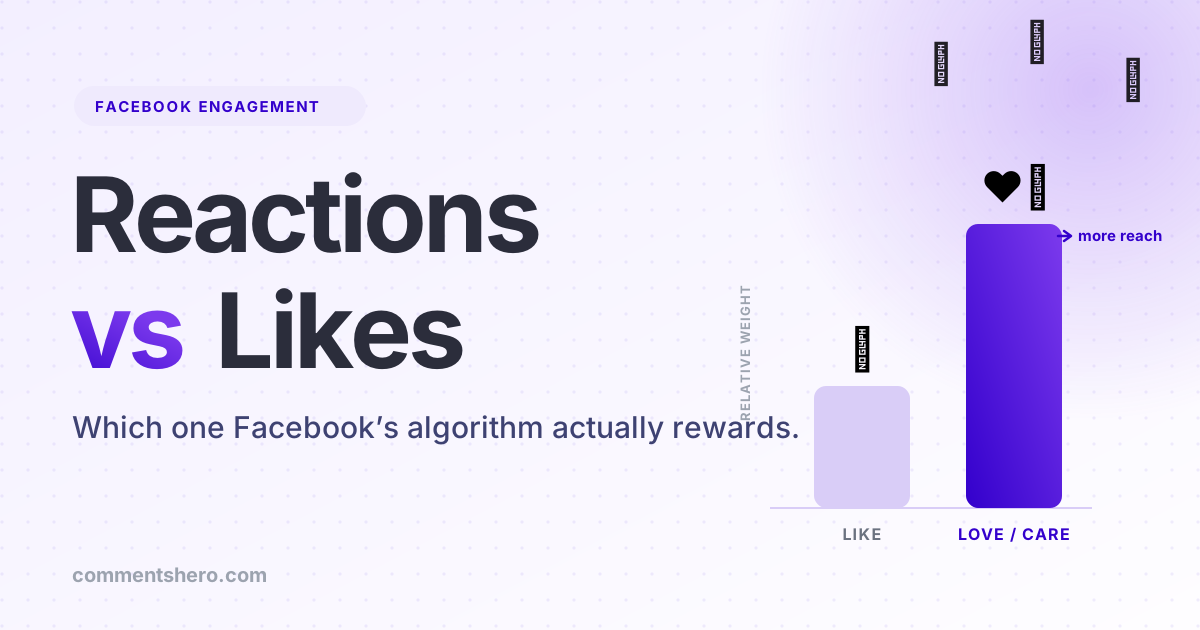
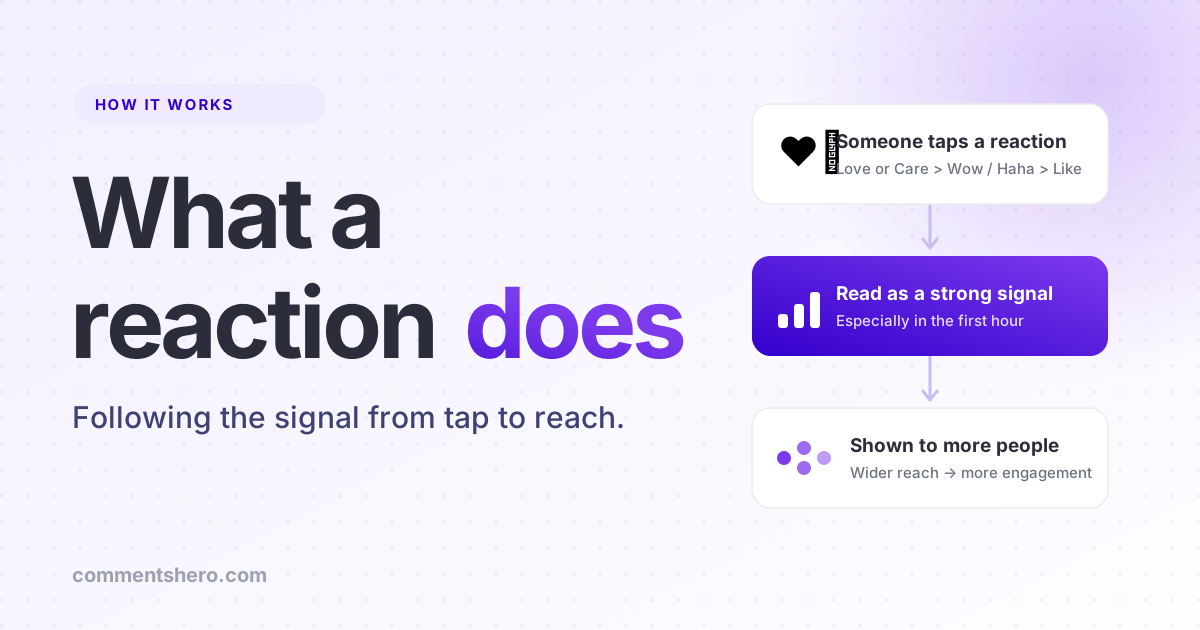
- Weight order: Love / Care > Wow / Haha > Sad > Like. Angry is treated cautiously and can act as negative feedback.
- Timing beats type. Reactions in the first 30–60 minutes move reach far more than the same reactions a day later.
- You influence this with better hooks and prompts (full playbook here) or by seeding a natural reaction mix in the early window.
The one-sentence version
Facebook decides how widely to distribute a post by predicting how much engagement it will get; reactions are one of the strongest inputs to that prediction, and stronger reactions arriving sooner push the prediction — and the reach — higher.
How the ranking system actually uses a reaction
Every time your feed loads, Facebook scores each candidate post for you and orders them by that score. The score is essentially a prediction of how likely you are to engage meaningfully — react, comment, share, dwell on it. Reactions feed that prediction in two ways:
- As past evidence. A post that has already earned reactions from people similar to you is predicted to earn one from you too, so it ranks higher in your feed.
- As a “meaningful interaction” signal. Facebook explicitly weights interactions it considers meaningful — and a reaction, because it takes a deliberate tap, counts as more meaningful than a passive view.
More reach means the post is shown to more feeds; each of those is another chance at another reaction; which raises the score again. That feedback loop is why the early signals matter so much.
The reaction weighting — and how it has changed
Facebook doesn’t publish exact numbers, and they’ve moved over the years:
- 2017: reactions launched weighted the same as a Like while Facebook gathered data.
- 2018: reporting indicated reactions were weighted several times more than a Like, as a stronger signal of interest.
- Since then: the “meaningful social interactions” shift pushed Love and Care to the top, kept Wow / Haha high, and made Angry something the system treats carefully — a lot of Angry reactions can be read as negative feedback rather than a reach boost.
The through-line across every version: an emotional reaction beats a Like, and Love/Care lead. We compare them side by side in Facebook reactions vs likes.
Why the first hour multiplies everything
When you publish, Facebook shows the post to a small initial slice of your audience and watches what happens — mostly over the next 30–60 minutes. Strong early engagement (reactions, comments, dwell time) tells the system the post is a winner, and it widens distribution. A flat start tells it the opposite, and that’s very hard to undo later.
So a Love in minute five is worth more than ten Likes the next afternoon — not because of the reaction type, but because of when it lands and how it shapes that first read.
Takeaway: publish when your audience is actually online, then make sure the first hour isn’t empty — reply to early comments, react as the Page, and if the post genuinely deserves reach, give it a running start rather than hoping.
Reactions vs comments vs shares in the ranking
Reactions are strong, but they’re not the top of the ladder:
- Shares — the user put their own name on it. Highest weight.
- Comments — time and effort, and they generate more content to rank. This is why turning passive likes into comments is such a reliable lever.
- Reactions — Love/Care first. Cheap and fast to earn, and enough to make a post look alive.
- Likes — useful volume, low weight.
For most posts the best-value mix is a base of reactions with a few comments on top — it satisfies both the “looks active” and the “has a conversation” checks the ranking system runs.
When reactions can actually hurt reach
- Lots of Angry reactions on your own post can be read as negative sentiment and dampen distribution rather than boost it.
- Reaction-baiting (“React ♥️ if you love Fridays!”) works once, then Facebook demotes the pattern — engagement-bait is explicitly down-ranked.
- Mismatched reactions — asking for Love on a post that only earns a shrug — produce a weak, unconvincing signal and can train your audience to ignore your prompts.
How to turn this into more reach
The mechanism above points to a short list of levers:
- Write for a feeling. The first line should make someone feel something, so the reaction is real.
- Ask for one specific reaction, matched to that feeling.
- Publish into an active window and protect the first hour with fast replies.
- Prime the post — react as the Page, get two or three genuine early responses.
The step-by-step version, with post formats and a weekly cadence, is in how to get more reactions on Facebook posts, and the broader habit is covered in our engagement guide.
Where seeding reactions fits
Because the first hour carries so much weight, leaving it to chance is the weak point in most posting routines. Adding a small, believable mix of reactions from real profiles — drip-fed, not dumped — gives the ranking system the early positive signal it’s looking for, and makes real viewers more likely to add their own. That’s the whole logic of buying Facebook reactions; the safe way to do it (real accounts, natural spread, first-hour timing, comments on bigger orders) is covered in the practical guide to buying Facebook reactions.
Ratio matters to the algorithm too. A spike of reactions with no comments and no dwell time is a thin signal. If you’re seeding at scale, add a few comments so the engagement profile looks like a real post catching on.
Frequently Asked Questions
Do Facebook reactions increase reach?
Yes. Reactions feed Facebook’s engagement prediction, and posts predicted to earn more engagement are shown to more people. Love and Care carry the most weight; the boost is strongest when reactions arrive in the first hour.
How much does a reaction boost a post compared to a Like?
Facebook doesn’t publish exact multipliers and they’ve changed over time, but reactions have consistently been weighted more heavily than a plain Like, with Love and Care at the top. Treat it as “meaningfully more,” not a fixed number.
Does the Angry reaction hurt my reach?
It can. A high volume of Angry reactions on your own post can be interpreted as negative feedback and reduce distribution, which is why Angry-bait rarely pays off for brand pages.
Is timing more important than which reaction people use?
Usually, yes. Strong engagement in the first 30–60 minutes influences distribution more than whether those responses were Likes or Loves. Aim for both: heavier reactions, earlier.
Will buying reactions actually improve reach?
It can help by supplying the early positive signal a post needs to get past its initial audience test — provided the reactions are from real profiles, drip-fed, and timed to the first hour. Order a natural mix on the reactions order form.
Do reactions matter more than comments?
No — comments and shares outrank reactions in the ranking system because they take more effort and generate more content. Reactions are the cheaper, faster signal; the strongest posts earn a mix of all three.